Musée des Beaux-Arts & d’Archéologie Besançon
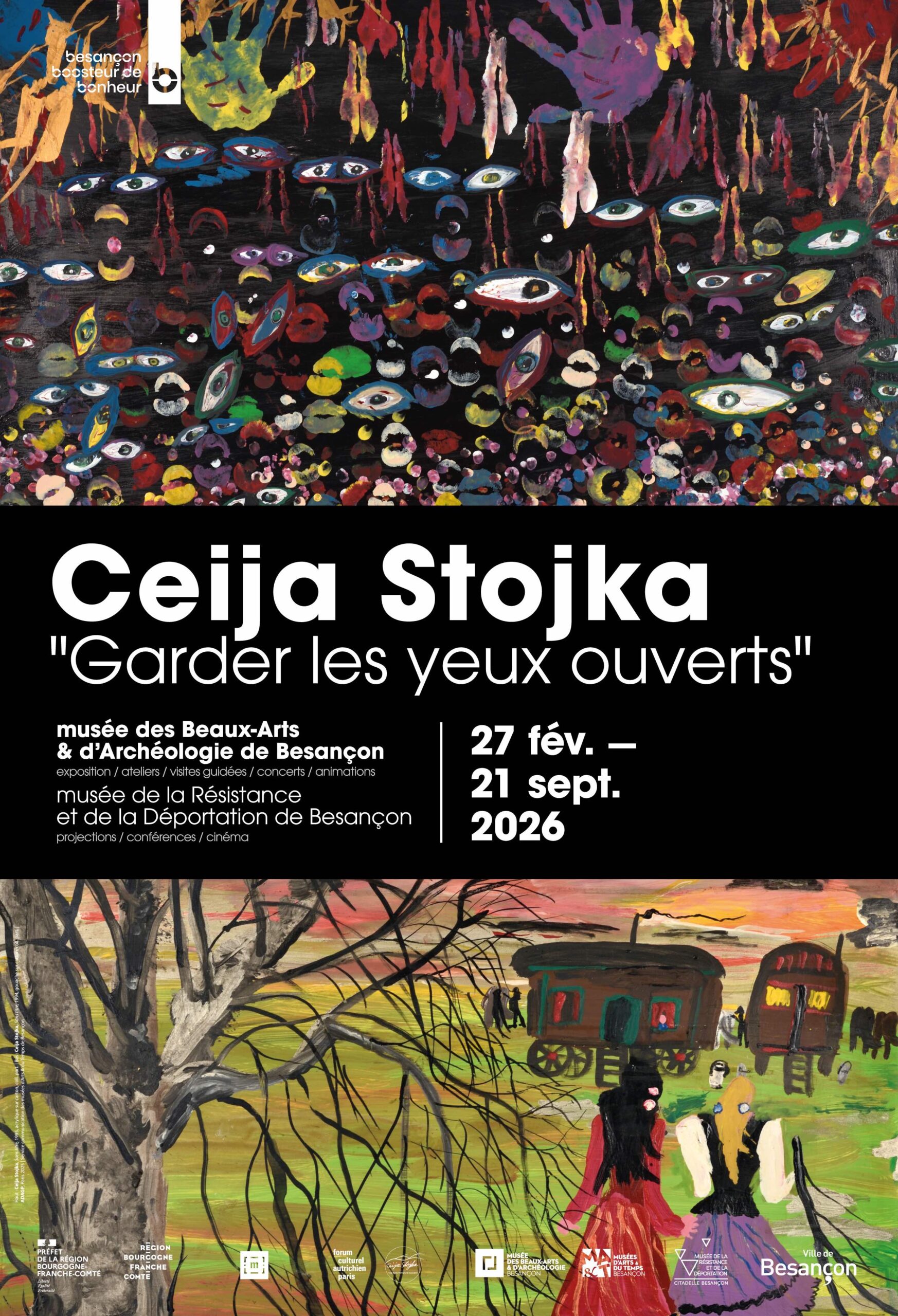
Ceija Stojka
Keep your eyes openCurator: Amandine Royer and Vincent Briand
Ceija Stojka (pronounced "Shaya Stoika") was born in 1933 in southeastern Austria, into a Roma family. At that time, Roma—then called "Gypsies"—were quite numerous in the region. In 1938, Austria was annexed by Nazi Germany. Adolf Hitler's racial policies designated Roma, like Jews and Germans of non-Germanic origin, as foreigners in their own country. Deprived of their rights and persecuted, they were deported to concentration camps. Ceija was arrested on March 3, 1943, along with her mother and siblings. She was sent to the Auschwitz-Birkenau concentration camp, then transferred to Ravensbrück and finally Bergen-Belsen, from which she emerged alive in May 1945. While the genocide of the Jews—the Shoah—was quickly recognized, that of the Roma, known as Samudaripen in Romani, remained largely ignored for a long time.
In 1988, at the age of 55, Ceija Stojka became the first person in her country to bear witness to it, publishing a book in which she recounted her childhood and the deportation of her family. Shortly afterward, she began to paint and draw, teaching herself to express her feelings and memories. From then until her death in 2013, she created approximately 1,000 works. Her art evokes both the horrors of the camps and the happy moments of her youth and her life after the war. Today, Ceija Stojka is internationally recognized as an artist and a key witness to the Roma genocide. His work contributes to the memory of this tragedy and to the knowledge of these peoples, who constitute the largest minority in Europe.
MBAA Besançon
From 27 February 2026
to 21 September 2026
Artwork(s) loaned
-

Ceija Stojka (1933—2013)
Untitled 1995Oil on cardboardLa Maison Rouge - Ceija Stojka 2018