Musée Picasso
Kurt Schwitters
Le chaos-monde 1918–1948Curator: Cécile Godefroy and Johan Popelard
The work of the German artist, Kurt Schwitters (1887–1948), charts a unique path within the art of the first half of the 20th century, rooted in the collective experience of the destruction wrought by war and the iconoclastic, plastic reinvention characteristic of the radical German art scene of the 1920s and 1930s. A painter, assembler, poet, musician, sculptor, typographer, magazine editor and event organiser, this anarchist “one-man band” artist, whose work is inseparable from his life, defies categorisation and appears impossible to classify. Schwitters, who initiated unprecedented collaborations with Dada and the constructivists whilst formulating his own Merz movement, ranks among the key figures of the geometric abstraction movement, having participated in several historic events in Paris during the interwar period.
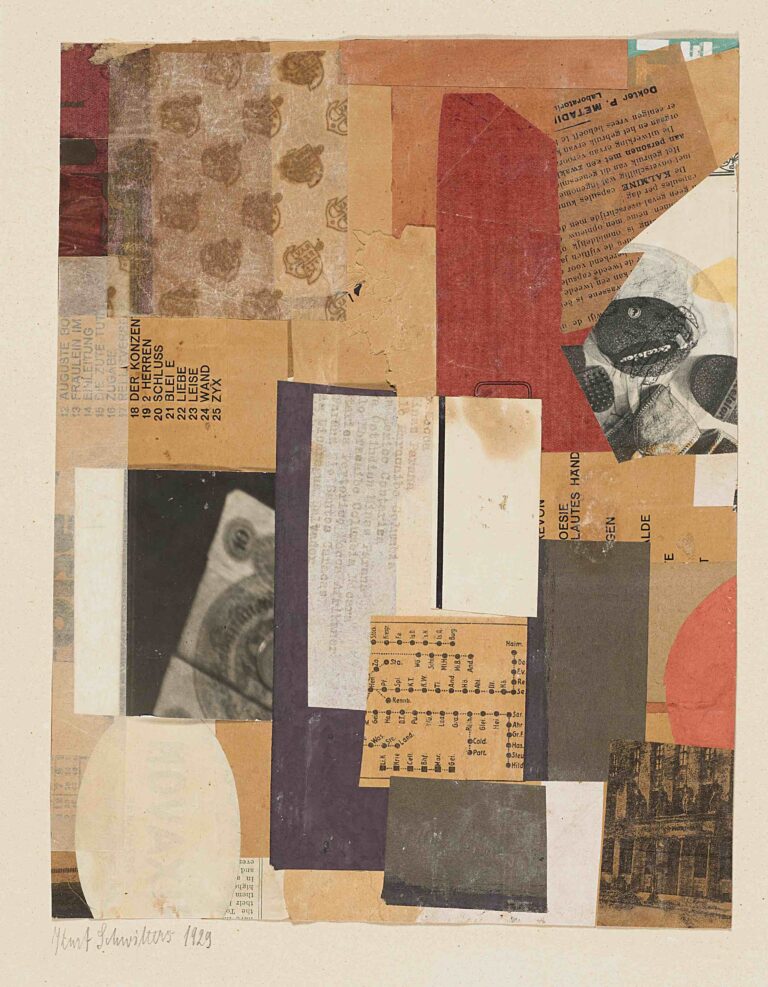
He is one of those artists who, like his contemporary Pablo Picasso and other figures from the Dada movement, helped to radically redefine the boundaries of art. He created his works from scrap and rubbish, transforming them into “harmonious” material, and developed an organic architecture of angles and recesses within his own home, the Merzbau. He also applied the technique of collage to the realm of poetry, composed and performed the extraordinary Ursonate – a sonata of primitive sounds – and created a magazine, typographic advertising slogans, blends and sculptures.
Musée Picasso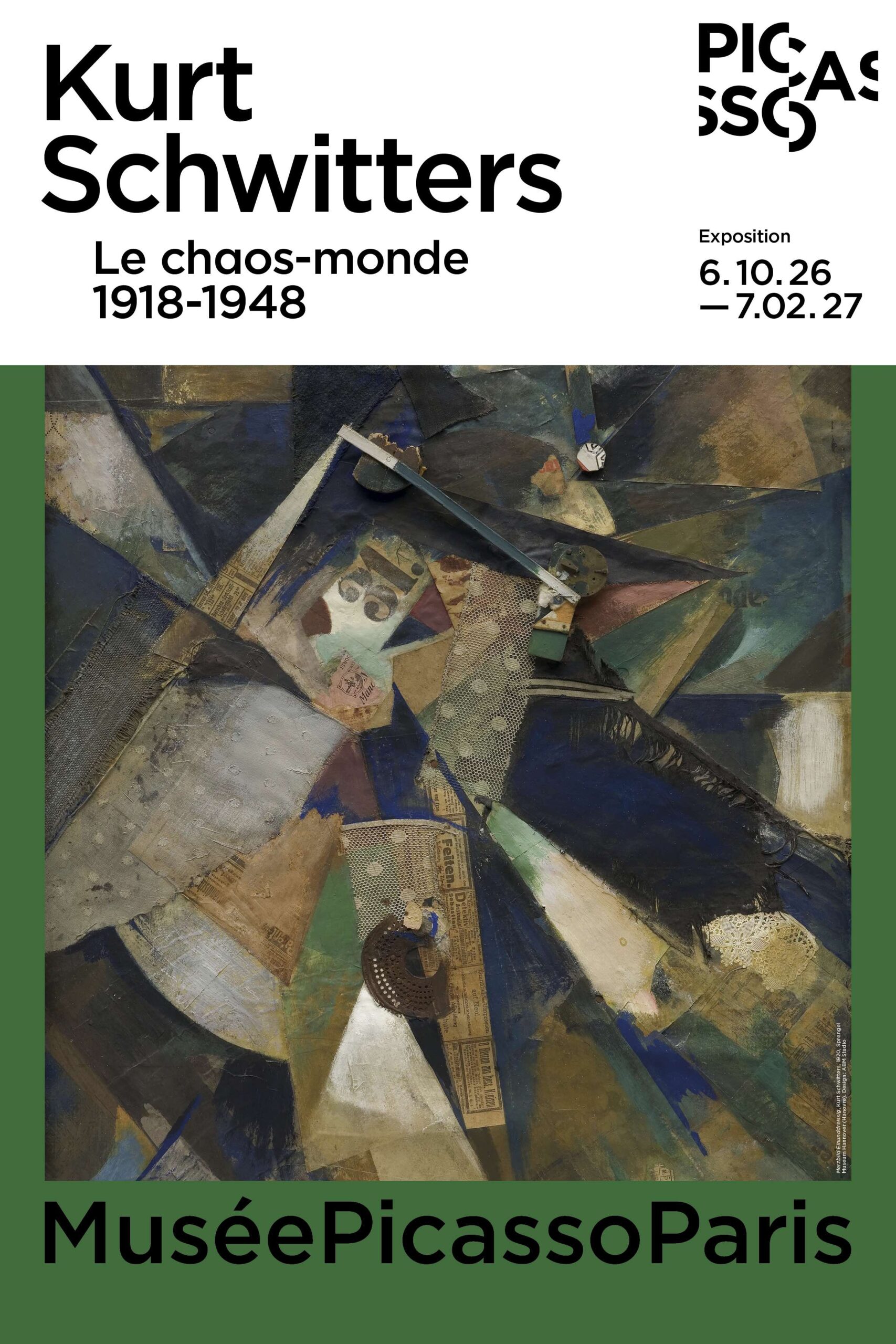
-
Kurt Schwitters (1887—1948)
Untitled (OESIE) 1929Printed paper and photograph collage on paper laid down on cardThe Collection of Robert F. and Patricia G. Ross Weis, New YorkMusée du Niel courtesy Collection de Bueil & Ract-Madoux